Pasteurizers & sterilizers · · Updated · 12 min read
Milk Pasteurizer Buying Guide: Plate, Tubular, Batch or UHT
Compare HTST plate, tubular, batch and UHT milk pasteurizers: time-temperature rules, regeneration, shelf life and a step-by-step checklist for buyers.
By the process engineering team at Supreme Beast Intelligent Machinery (Shanghai) Co., Ltd.

Key takeaways
- HTST pasteurization of milk means at least 72 °C for 15 seconds; batch (vat) pasteurization means at least 63 °C for 30 minutes.
- Plate heat exchangers suit low-viscosity milk and recover up to 94–95% of heat; tubular units tolerate particles, pulp and higher pressures.
- UHT treatment runs at 135–150 °C for a few seconds and, with aseptic filling, gives months of ambient shelf life.
- Size the pasteurizer from real hourly flow, holding-tube length and the cleaning cycle, not from the daily milk volume alone.
- Under the US Pasteurized Milk Ordinance, goat, sheep and water buffalo milk count as milk, so the same 63 °C/30 min and 72 °C/15 s minimums apply; US juice processors must instead achieve a 5-log pathogen reduction under FDA juice HACCP.
Which milk pasteurizer should you choose?
Choose an HTST plate pasteurizer for continuous fresh milk above a few thousand litres per day, a batch (vat) pasteurizer for small or multi-product runs, a tubular unit for viscous or particulate products, and a UHT system with aseptic filling when you need months of ambient shelf life. The deciding factors are product type, hourly flow, target shelf life and budget for downstream packaging.
All four technologies destroy pathogens; they differ in how fast heat is transferred, how much energy is recovered, what the product looks and tastes like afterwards, and how long it keeps. This guide compares them with verified time–temperature standards, shows which pasteurizer machine suits small farms, goat milk and juice, and gives a practical selection checklist. You can browse the full range of pasteurizers and sterilizers alongside it.
What time and temperature does milk pasteurization require?
The internationally recognized minimums are 72 °C for 15 seconds for continuous-flow (HTST) pasteurization and 63 °C for 30 minutes for batch pasteurization. The Codex Code of Hygienic Practice for Milk sets these as equivalent minimums, and the US Pasteurized Milk Ordinance adds 3 °C for products with 10% or more fat or added sweeteners.
| Method | Temperature | Minimum time | Typical equipment |
|---|---|---|---|
| Vat / batch (LTLT) | 63 °C (145 °F) | 30 minutes | Jacketed tank with agitator |
| HTST | 72 °C (161 °F) | 15 seconds | Plate or tubular heat exchanger with holding tube |
| HHST | 89–100 °C | 1.0–0.01 seconds | Plate or tubular, higher-pressure design |
| Ultra-pasteurized (UP) | 138 °C (280 °F) | 2 seconds | Tubular, plate or direct steam |
| UHT (Codex) | 135–150 °C | Seconds, to commercial sterility | Indirect tubular/plate or direct steam injection/infusion, plus aseptic filler |
In practice, processors run slightly above the legal floor. The Tetra Pak Dairy Processing Handbook gives 72–75 °C for 15–20 seconds for homogenized market milk, and Codex sets a higher minimum of 75 °C for 15 seconds for cream. Yogurt milk is deliberately heated much harder, typically 90–95 °C for about 5 minutes, to denature whey proteins and improve texture.
Our pasteurization temperature and time guide covers the combinations for other products and the logic behind them in more detail.
How do plate, tubular, batch and UHT pasteurizers compare?
Plate HTST units give the best heat recovery and smallest footprint for liquid milk; tubular units trade some efficiency for tolerance of viscosity, particles and high pressure; batch vats are cheapest and most flexible but slow and energy-intensive; UHT systems cost the most but remove the cold chain.
| Criterion | HTST plate | HTST / UHT tubular | Batch vat | UHT + aseptic |
|---|---|---|---|---|
| Operation | Continuous | Continuous | Batch | Continuous |
| Heat recovery | Up to 94–95% regeneration | High, slightly below plate | Little or none | High (indirect); lower (direct) |
| Best products | Milk, skim, cream up to moderate viscosity | Flavoured milk, cream, drinks with pulp or particles | Small runs, cheese and yogurt milk, pilots | Long-life milk, plant-based drinks, cream |
| Particle tolerance | Low | Monotube designs pass particles up to about 50 mm | High | Depends on heat exchanger |
| Typical shelf life | 7–10 days at 5–7 °C | Same as HTST, or months if UHT | Similar to HTST | Months at ambient (e.g. 3–9 months) |
| Relative cost | Medium | Medium–high | Low | High (includes aseptic filling) |
HTST plate pasteurizers
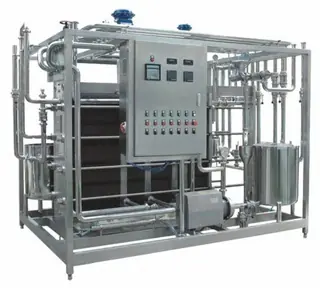
A plate pasteurizer heats milk in thin channels between gasketed plates. Incoming cold milk is warmed by outgoing pasteurized milk in the regeneration section, which, according to the Dairy Processing Handbook, can recycle 94–95% of the heat. A holding tube guarantees residence time, a flow diversion valve returns under-temperature milk to the balance tank, and a booster pump keeps the pasteurized side at higher pressure than the raw side so a pinhole leak cannot contaminate finished milk. Our plate type HTST milk pasteurizer is a typical example of this configuration.
Tubular heat exchangers
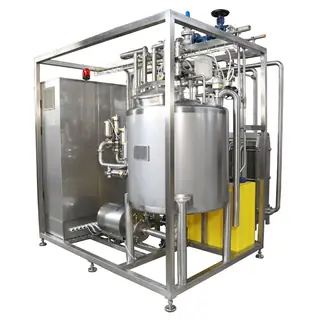
Tubular units have fewer gaskets, withstand higher pressures and temperatures, and allow particles to pass. They are the usual choice for indirect UHT, for products with fruit pieces or high viscosity, and for long production runs where fouling would quickly block narrow plate channels. Our plate vs tubular heat exchanger comparison explains the trade-offs in detail.
Batch (vat) pasteurizers
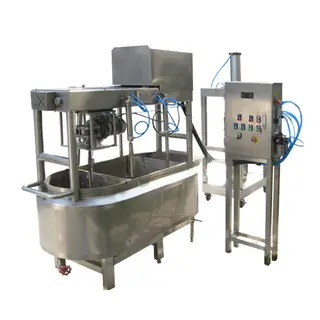
A jacketed, agitated tank holds milk at 63 °C for 30 minutes. It suits small creameries, farmstead cheese makers and plants that switch between many recipes. The drawbacks are long cycle times, little heat recovery and the need for careful temperature recording across the whole vat, including foam and air space.
UHT systems
UHT heats product to 135–150 °C for a few seconds. The handbook describes practical settings of 137–142 °C for 4–6 seconds; indirect tubular plants typically heat to about 138 °C with about 4 seconds' hold, while direct steam injection reaches 140–150 °C and flash-cools in a vacuum vessel. UHT only delivers ambient shelf life when paired with an aseptic filler and a sterilized downstream path. For the differences in taste, shelf life and cost, see UHT vs pasteurized milk.
How do you size a milk pasteurizer?
Divide the daily volume by the effective production hours (after cleaning and start-up), add 10–20% headroom, then size the holding tube for the required seconds at that flow. A 20,000-litre day processed in 8 effective hours needs about 2,500 L/h; a 3,000 L/h unit gives comfortable margin.
- Fix the daily volume and product mix (milk, cream, yogurt base) and the hours you can actually run.
- Subtract cleaning time. A heated circuit CIP with rinse, caustic, rinse and acid steps takes roughly 70–90 minutes.
- Calculate hourly flow and round up to the next standard capacity.
- Size the holding tube. The handbook's worked example: 10,000 L/h held for 15 seconds in a 48.5 mm tube needs about 26.5 m of holding tube.
- Check upstream and downstream matching with the separator, homogenizer and filler so the pasteurizer is not forced into frequent recirculation.
To test different daily volumes and shift patterns before you request quotations, try our production line planner.
Which pasteurizer suits small farms, goat milk and juice?
Below about 1,000 litres a day, a batch (vat) pasteurizer is usually the most practical choice; from roughly 1,000 to 4,000 litres a day, a compact plate pasteurizer pays off; goat, sheep and buffalo milk follow the same time–temperature rules as cow milk; and a juice pasteurizer machine should be plate-type for clear juice and tubular for pulpy juice.
"Pasteurizer machine" covers everything from a 300-litre jacketed vat to a 20,000 L/h HTST skid. The table below converts daily volume into the hourly flow a continuous unit must handle, using the same method as the sizing section above. The figures are arithmetic, not product ratings: always add 10–20% headroom and confirm against your own cleaning and start-up times.
| Daily volume | Effective run time | Flow a continuous unit must handle | Usual pasteurizer type |
|---|---|---|---|
| 200–1,000 L | 1–2 batches | Not continuous: each batch held at 63 °C for 30 minutes, plus heating, cooling and emptying | Jacketed batch vat of 300–1,000 L with agitator, often doubling as cheese or yogurt vat |
| 1,000–4,000 L | 4–6 h | About 170–1,000 L/h | Small plate pasteurizer with regeneration, or a larger vat run in several cycles |
| 4,000–16,000 L | 6–8 h | About 500–2,700 L/h | HTST plate unit of 1,000–3,000 L/h with balance tank, holding tube and diversion valve |
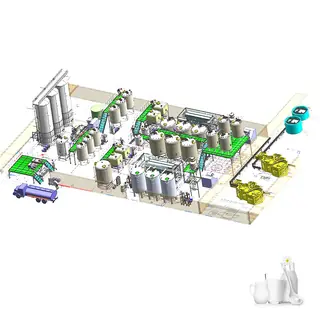
| 16,000–80,000 L | 8–16 h | About 1,000–10,000 L/h | HTST plate unit integrated with separator, homogenizer and CIP |
| Pulpy juice, nectar or purée (any volume) | As above | As above | Tubular or tube-in-tube pasteurizer |
Small farms and farmstead dairies
For farmstead cheese and yogurt makers, the batch pasteurizer is often the most practical milk pasteurizer machine because the same vessel heats, holds and cools the milk and can then serve as the process vat. A jacketed cheese vat of 300–2,000 L fitted with the controls described in the next section covers this duty. Once volumes climb past a few thousand litres a day, a small plate pasteurizer for milk and juice with a regeneration section shortens the working day and recovers most of the heat a vat would waste. In tropical climates, size the cooling section for the real cooling-water temperature; many sites need a chiller or ice-water circuit to bring milk down to about 4 °C.
Goat milk pasteurizer
There is no separate legal standard for goat milk. The definitions section of the US Pasteurized Milk Ordinance states that the word milk includes goat milk, and the same wording appears for sheep and water buffalo milk. The PMO time–temperature chart therefore applies: 63 °C for 30 minutes in a vat or 72 °C for 15 seconds in continuous flow, with 3 °C added when fat is 10% or more, total solids are 18% or more, or sweeteners are added. Where goat milk volumes are modest and most of it becomes cheese or yogurt, a vat or a small plate unit feeding a cheese vat is the usual layout. Mixed-species plants can use a pasteurized milk line for buffalo, goat and camel milk, with full cleaning between species if they are sold separately.
Juice pasteurizer machine
Juice is regulated differently from milk. In the US, the FDA juice HACCP rule (21 CFR 120.24) requires control measures that consistently achieve at least a 5-log (100,000-fold) reduction of the most resistant pathogen of public health significance likely to occur in the juice. University of Florida IFAS Extension notes that Salmonella is generally the pertinent organism for citrus juice, that pasteurization is the usual way to achieve the reduction, and that the treatment must take place in the facility where the juice is packaged.
The equipment choice follows the product. Clear apple or grape juice runs well through a plate unit, while orange juice with pulp cells, mango nectar or tomato juice needs wider channels, so a tubular pasteurizer for fruit juice and milk is the safer choice. "Flash pasteurizer" and "flash pasteurization equipment" are trade terms for the same continuous HTST principle applied to juice and beer: rapid heating, a short hold and immediate cooling. Start-ups that want to run both products can use a milk and fruit juice pasteurizer of 500–2,000 L/h, cleaning fully between products. Where the pasteurizer sits in the wider process, from washing and extraction to filling, is explained in our juice production line process guide.
If you are unsure which row of the table your plant fits, our engineers can size the pasteurizer for you from your daily volume, product mix and shift pattern.
What should you check before buying a batch pasteurizer or any pasteurizer for sale?
Check that the machine can prove every particle of product reached the required temperature for the required time. For a batch pasteurizer that means continuous agitation, indicating and recording thermometers, an airspace thermometer, leak-protector outlet valves and a close-fitting cover; for continuous units, a correctly sized holding tube, flow diversion valve and recorder.
The Florida Department of Agriculture's summary of batch vat requirements under the PMO is a useful checklist. It requires the air above the product to stay at least 3 °C (5 °F) above the minimum pasteurization temperature throughout the hold, notes that larger vats usually need an airspace heater, and limits the difference between the coldest point and the rest of the batch to 0.5 °C. Agitation must run during the whole holding period, no product may be added once holding starts, and recording charts must be kept for at least three months.
Checklist for a batch pasteurizer
- Agitation: an agitator that is covered by the minimum batch size and keeps temperature uniform.
- Thermometers: an indicating thermometer, a recording thermometer or data logger, and an airspace thermometer, all calibrated.
- Airspace heating: a heater or steam-heated cover on larger vats so foam and splashes reach temperature.
- Outlet valve: a close-coupled leak-protector valve so raw milk cannot leak into the outlet line during holding.
- Cover: close-fitting, kept shut during operation to keep out condensate, dust and insects.
- Jacket and controls: hot-water or steam jacket with automatic temperature control and cold-water or ice-water cooling.
- Materials and documents: AISI 304 or 316L product-contact surfaces, material certificates, manual and wiring diagram.
Batch pasteurizer retrofits
Many older vats were built as plain process tanks. When we assess a batch pasteurizer retrofit, we check whether the vat can take the missing control points: a recording thermometer or logger, an airspace thermometer and heater, a leak-protector outlet valve and an automatic jacket controller. If the jacket cannot heat and cool the full batch evenly, replacement is usually more economical than modification.
New or used pasteurizer for sale
A low price on a used milk pasteurizer for sale can hide expensive gaps. Ask for the plate pack inspection or pressure-test record, the age of the gaskets, the holding tube length and the flow it was validated for, and the calibration status of the recorder and diversion valve. Check the electrical supply: a panel built for 380 V at 50 Hz needs rework for a 60 Hz site, because pump and motor speeds change with frequency. For new equipment, compare quotations on the same specification list below, not on headline capacity alone.
What should a pasteurizer specification include?
A complete specification states product, flow rate, inlet and outlet temperatures, pasteurization temperature and hold time, regeneration percentage, heating and cooling media, control and recording functions, and CIP requirements. Missing any of these makes supplier quotations impossible to compare.
- Safety controls: automatic flow diversion valve, independent temperature recording, pressure differential protection across regeneration.
- Hygienic design: AISI 304 or 316L product-contact stainless steel, food-grade gaskets, self-draining pipework.
- Heating medium: hot-water circuit (gentler, keeps the wall-to-product temperature difference to a few degrees and limits fouling) versus direct steam.
- Cooling: regeneration plus a chilled or ice-water section to reach about 4 °C.
- Cleaning: CIP-ready with acid and caustic steps, plus a 90–95 °C hot-water sterilization routine before production (see our CIP system guide).
- Integration: homogenizer position, separator, deaerator and buffer tanks.
When we engineer a pasteurization skid, we start from these data points and the product's fouling behaviour, because a unit that is correctly sized for flow but not for run time will spend too much of the day in cleaning.
What are the most common buying mistakes?
The most frequent errors are buying on nominal capacity without allowing for cleaning time, choosing plates for products that foul or carry particles, skipping the booster pump or diversion valve, and planning UHT without budgeting for aseptic packaging. Each of these leads either to food-safety risk or to a line that never reaches its rated output.
If you would like a second opinion on your pasteurizer specification, our engineers can review your product mix and flow data and suggest a suitable configuration.
What information do you need for a quotation?
To quote a pasteurizer accurately we need the product, daily volume and effective run hours, required temperature and hold time, how the product arrives and leaves (raw milk tank, homogenizer, filler), available heating and cooling utilities, and your local voltage and frequency. With these, quotations from different suppliers become directly comparable.
- Product: cow, goat, sheep, buffalo or camel milk, cream, yogurt milk, juice (clear or with pulp), or several of these.
- Capacity: daily volume, hours per day available for production, and planned growth over the next three to five years.
- Process targets: pasteurization temperature and hold time, outlet temperature, and whether you need homogenization, separation or UHT.
- Packaging: bulk tank, pouch, bottle, carton or aseptic bag, and the filler capacity it must match.
- Utilities: steam or electric heating, cooling-water temperature, chilled water or ice-bank availability, and compressed air.
- Electrical supply: voltage, phase and frequency (50 or 60 Hz), and any local certification requirements.
- Site: room dimensions, ceiling height, ambient temperature and whether CIP already exists.
Send these details through our quotation form, by email to [email protected] or on WhatsApp at +86 18674401177. Our engineers will reply with a proposed configuration, a flow diagram and the utility consumption you should plan for.
Frequently asked questions
What is the difference between HTST and UHT milk?
HTST milk is heated to at least 72 °C for 15 seconds and must be refrigerated, typically lasting 7–10 days. UHT milk is heated to 135–150 °C for a few seconds and filled aseptically, so it is commercially sterile and keeps for months at room temperature.
Is a plate or tubular pasteurizer better for milk?
For plain milk, a plate pasteurizer is usually better because it recovers up to about 95% of heat in a compact footprint. A tubular unit is better for viscous products, drinks with pulp or particles, very long runs, and indirect UHT, where higher pressures and temperatures are needed.
When does a batch pasteurizer make sense?
A batch (vat) pasteurizer makes sense for small volumes, frequent recipe changes, or cheese and yogurt making where the vat can also serve as a process tank. It holds milk at 63 °C for 30 minutes, so throughput is limited and energy recovery is minimal.
Why do pasteurizers need a flow diversion valve?
The flow diversion valve automatically sends milk back to the balance tank if it falls below the set pasteurization temperature at the end of the holding tube. It prevents under-processed milk from reaching the cooling section and filler, and is a core regulatory control point.
Can the same pasteurizer handle goat milk and cow milk?
Yes. The US Pasteurized Milk Ordinance defines milk to include goat, sheep and water buffalo milk, so the same minimums apply: 63 °C for 30 minutes in a batch pasteurizer or 72 °C for 15 seconds in an HTST unit. One machine can process both, provided it is fully cleaned between species when they are sold as separate products.
What size pasteurizer machine does a small farm need?
Divide daily volume by the hours you can actually run. Below about 1,000 litres a day, a 300–1,000 L batch vat is usually enough and can double as a cheese or yogurt vat. From about 1,000 to 4,000 litres a day, a small plate pasteurizer of up to about 1,000 L/h with heat regeneration saves time and energy.
What is a flash pasteurizer?
Flash pasteurizer is a trade name for a continuous high-temperature short-time (HTST) unit, used mainly for juice and beer. Product is heated quickly in a plate or tubular heat exchanger, held for a short, controlled time and cooled immediately. For milk the legal minimum is 72 °C for 15 seconds; US juice processes must deliver a 5-log pathogen reduction.
Sources
- IDFA – Pasteurization (time/temperature table from the PMO)
- Codex – Code of Hygienic Practice for Milk and Milk Products (CAC/RCP 57-2004)
- Tetra Pak Dairy Processing Handbook – Heat exchangers
- Tetra Pak Dairy Processing Handbook – Long-life dairy products
- Tetra Pak Dairy Processing Handbook – Pasteurized and ESL dairy products
- FDA – NCIMS Model Documents (Grade A Pasteurized Milk Ordinance)
- Grade A Pasteurized Milk Ordinance (2013), Section 1 – Definitions (hosted by Purdue Extension)
- Florida Department of Agriculture and Consumer Services – Requirements for Batch (Vat) Pasteurization
- eCFR – 21 CFR 120.24 Process controls (juice HACCP 5-log reduction)
- University of Florida IFAS Extension – The Juice HACCP Program: An Overview (FSHN05-15)